
Choosing between clear braces and Invisalign comes down to understanding how each treatment fits your smile goals, your lifestyle, and your clinical needs. Both options straighten teeth beautifully without the look of traditional metal brackets, but they work in very different ways. At Maui Orthodontics by Bonham and Bonham, Dr. Paul Bonham and Dr. Aurelia Bonham help patients weigh the pros and cons of each so you can make a confident, informed decision.

What Are Clear Braces and Invisalign?
Clear braces and Invisalign are two discreet orthodontic treatments designed to straighten teeth without the look of standard metal brackets. Clear braces use tooth-colored ceramic brackets bonded to each tooth and connected by a thin archwire. Invisalign uses a series of removable, custom-made clear plastic aligner trays that gradually shift your teeth into position.
Both options are intended as subtle alternatives to advanced metal braces, but they function differently day to day. Clear braces stay in place around the clock, quietly doing their work whether you’re eating lunch at Costco or paddling off Ka’anapali. Invisalign, on the other hand, is removable for meals, brushing, and flossing, which gives you more flexibility but also more responsibility.
When prescribed appropriately, both treatments can correct a wide range of alignment and bite concerns, from crowded teeth and gaps to overbites, underbites, and crossbites. Maui Orthodontics by Bonham and Bonham offers both discreet braces options so you can choose the one that genuinely fits your smile and your life.
How Each Discreet Treatment Works
Each option follows a different path to the same goal: healthy, confident smiles. Here’s how the process looks for each.
How Clear Braces Work
- Bonding appointment. Dr. Paul or Dr. Aurelia bonds tooth-colored ceramic brackets to the front of each tooth and places the archwire, which Damon Clear brackets hold with built-in clips instead of elastic ties.
- Light, continuous pressure. The wire applies gentle force that guides teeth into their planned positions.
- Routine adjustments. You’ll visit the office every 8-10 weeks for wire changes and progress checks.
- Finishing phase. Once teeth are aligned, the brackets are removed and a retainer is fitted to protect your results.
How Invisalign Works
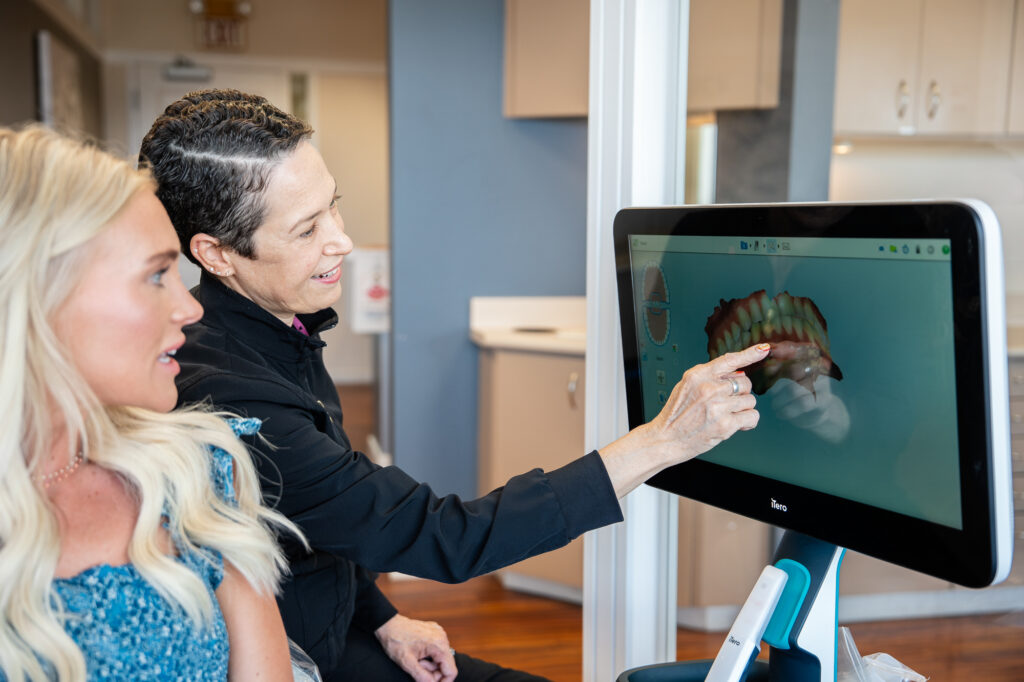
- Digital scans. We capture a 3D scan of your teeth (no traditional impressions) to design your custom treatment plan.
- Custom aligner series. A sequence of clear plastic trays is created, each slightly different from the last.
- Weekly or biweekly changes. You’ll switch to a new tray every 1-2 weeks and wear each aligner 20-22 hours a day.
- Attachments when needed. Small tooth-colored bumps may be bonded to certain teeth to help guide specific movements.
- Check-ins every 8-12 weeks. Dr. Paul and Dr. Aurelia track progress and hand off the next trays in the series.
Both treatments typically run 12-24 months depending on case complexity, though mild cases can finish sooner and more involved bites may take a bit longer.
Benefits of Clear Braces vs. Invisalign
Each option brings a distinct set of advantages. The right one depends on how you’d like to spend your time in treatment.
Benefits of Clear Braces
- Works 24/7 with no compliance required. You can’t take them out, which means no missed wear time and no delays in progress.
- Handles complex cases well. Clear braces are highly effective for significant crowding, stubborn rotations, and more involved bite correction.
- Subtle, natural appearance. Tooth-colored brackets blend with your enamel so they’re far less noticeable than metal.
- Predictable mechanics. Fixed brackets and wires give the orthodontist precise control over tooth movement.
- Great option for busy teens. Kids juggling school, sports, and surf lessons don’t have to remember anything.
Benefits of Invisalign
- Virtually invisible. Clear aligners are hard to spot in meetings, photos, or across the lunch table.
- Removable for meals. You can eat whatever you want, from kalua pork to crunchy apples, without worrying about broken brackets.
- Easier hygiene. Brushing and flossing happen just like they always have, which supports healthier gums during treatment.
- Smooth and comfortable. No brackets or wires means fewer sore spots on cheeks and lips.
- Flexible for special occasions. Weddings, graduations, big presentations, pop the trays out briefly and go.
- Fewer in-office visits. Appointments tend to be shorter and spaced further apart than with braces.
Both options support the same end goal: a healthy bite and a smile you love. The choice is really about which trade-offs feel right for you.
Clear Braces vs. Invisalign: Side-by-Side Comparison
Here’s a quick, scannable breakdown of how clear braces and Invisalign stack up on the factors that matter most to patients.
| Factor | Clear Braces | Invisalign |
|---|---|---|
| Visibility | Subtle but visible up close | Nearly invisible at conversational distance |
| Comfort | Occasional cheek or lip irritation possible | Smooth plastic, generally very comfortable |
| Hygiene | Careful brushing around brackets required | Remove to brush and floss normally |
| Compliance | Works automatically, no effort needed | Requires 20-22 hours of daily wear |
| Staining risk | Damon Clear brackets resist staining, with no elastic ties to discolor | Trays swapped weekly, staining rarely an issue |
| Case complexity | Handles mild to severe cases, including complex rotations | Excels for mild to moderate cases |
| Eating | Avoid hard, sticky, and crunchy foods | No food restrictions, remove to eat |
| Office visits | Every 8-10 weeks | Every 8-12 weeks on average |
| Best for | Teens, complex bites, hands-off treatment | Adults, image-conscious patients, disciplined wearers |
Reviewing this table during your free consult with Dr. Paul or Dr. Aurelia can help clarify which direction is right for your smile.
Who Is a Good Candidate for Each Option?
Not every discreet option is right for every smile. Here’s a quick decision framework based on what Dr. Paul Bonham and Dr. Aurelia Bonham, both board-certified orthodontists and Diplomates of the American Board of Orthodontics, typically see with their patient ohana.
Choose clear braces if you:
- Have complex bite issues, severe crowding, or significant tooth rotations
- Are a teen or busy professional who may forget to wear aligners consistently
- Prefer a hands-off treatment that works on its own
- Want precise, predictable mechanics for intricate movements
Choose Invisalign if you:
- Have mild to moderate crowding, spacing, or bite concerns
- Prioritize appearance in professional or social settings
- Are disciplined about wearing trays 20-22 hours daily
- Want the flexibility to remove your appliance for meals and events
Your lifestyle, oral hygiene habits, and treatment goals all shape the right choice. Only an orthodontist can confirm candidacy after a clinical exam, digital scans, and imaging, so the best next step is a conversation with Drs. Bonham and Bonham.
Frequently Asked Questions
Which is more discreet, clear braces or Invisalign?
Invisalign is generally the more discreet option because the clear aligners sit flush against your teeth and are hard to notice unless someone is looking closely. Clear braces are much subtler than metal, but the ceramic brackets are still visible up close. For patients whose top priority is a near-invisible appearance, Invisalign usually wins.
Is Invisalign faster than clear braces?
For similar cases, treatment times are comparable, typically 12-24 months. Some mild Invisalign cases finish quickly, while complex cases may actually move faster with clear braces because of how precisely brackets and wires can be adjusted. Speed depends more on case complexity and patient compliance than on the appliance itself.
Can I switch from Invisalign to clear braces mid-treatment?
Yes, switching is possible if your orthodontist recommends it. Occasionally a case that started with Invisalign reveals movements that would progress better with fixed braces, or a patient struggles with wear time. Dr. Paul and Dr. Aurelia will discuss the options with you and adjust the plan if a change makes sense.
Do clear braces stain easily?
Not with the system we use. The ceramic brackets themselves resist staining, and Damon Clear braces hold the wire with a built-in sliding door instead of elastic ties, so there are no tinted ties to discolor from coffee, tea, red wine, or curry. Good brushing habits keep your brackets looking their best throughout treatment.
What is the 30-minute rule with Invisalign?
The 30-minute rule means your aligners should be out of your mouth for no more than about 30 minutes per meal, with total daily out-of-mouth time staying under 2 hours. Longer breaks reduce the pressure needed to move teeth and can stretch out your treatment time. Sticking to the rule keeps progress on schedule.
Ready to Explore Your Discreet Smile Options?
If you’re weighing clear braces and Invisalign, the best next step is a conversation with Maui’s most experienced and trusted orthodontists. Dr. Paul Bonham and Dr. Aurelia Bonham have been voted “Best Orthodontists in Hawaiʻi” by dental peers in Honolulu Magazine for 15 consecutive years and have treated over 20,000 patients across the island.
Visit us at either convenient location:
- Kahului Office: 140 Ho’ohana St, Suite 312, Kahului, HI 96732 · (808) 871-6576
- Pukalani Office: 24 Kiopa’a Street, Suite 101, Pukalani, HI 96768 · (808) 793-3026
Schedule your free consult with Maui Orthodontics by Bonham and Bonham and find the discreet treatment that fits your smile, your lifestyle, and your goals. Where Maui comes to smile, we’d love to welcome you to the ohana.