
It is usually the second question people ask, right after whether they are a candidate. The frustrating part is that the honest answer starts with a range, and ranges feel like evasion. So here is the range, followed by what actually determines where in it you land.
Most Invisalign treatment takes twelve to eighteen months. Minor alignment corrections can finish in six months or less, while cases involving bite correction, significant crowding, or extractions commonly run eighteen to twenty-four months or longer. Your timeline depends on how far your teeth need to travel, what kind of movement is required, and how consistently you wear your trays.
Trays are typically changed every one to two weeks, and each change delivers a small increment of movement. The number of trays in your series is set during planning, which is why your orthodontist can give you a realistic estimate once records are done rather than before.
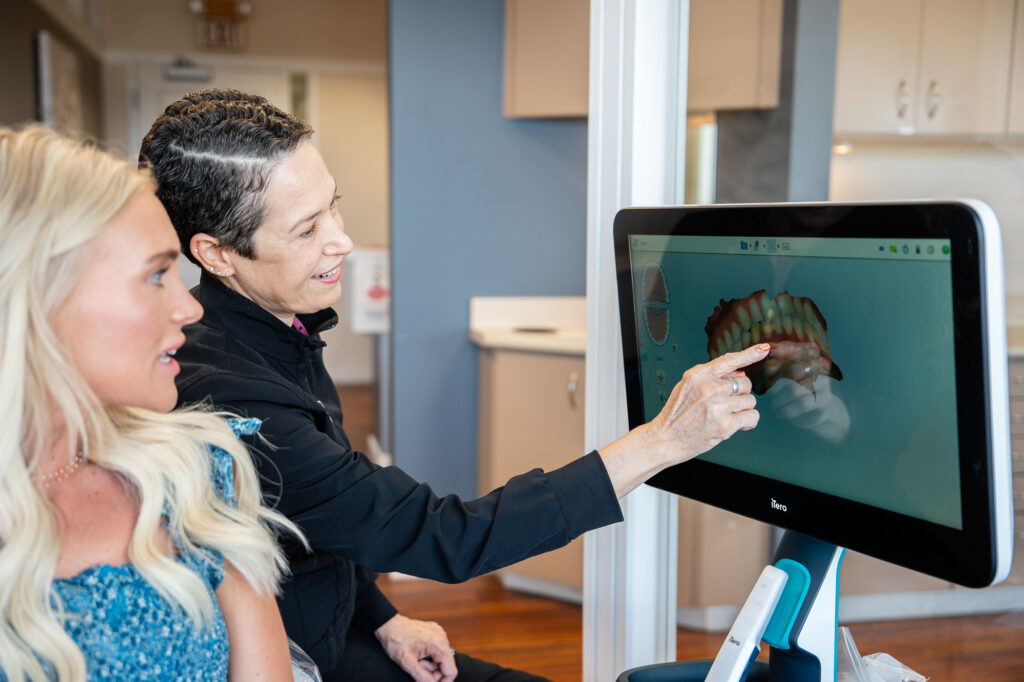
Rough expectations by case type:
| Case Type | Typical Duration |
|---|---|
| Minor front-tooth crowding or spacing | 4 to 9 months |
| Moderate crowding, no bite change needed | 9 to 15 months |
| Bite correction, including deep bite or crossbite | 12 to 24 months |
| Complex cases, including extractions or relapse retreatment | 18 to 30 months |
Treat these as orientation, not a quote. A case that looks simple in photographs can involve root movement that adds months, and a case that looks alarming can resolve faster than expected once the plan is built.
What Makes Treatment Take Longer
Some factors are biological and outside anyone’s control. Others are entirely in the patient’s hands, and those are the ones worth understanding before you start.
- Wear time. Trays need roughly 20 to 22 hours a day. This is the largest single factor by a wide margin.
- Type of movement. Tipping a tooth is fast. Moving a root, rotating a canine, or intruding a front tooth is slow.
- Bite correction. Changing how the arches meet takes longer than arranging teeth within them.
- Age and biology. Bone remodels somewhat faster in younger patients, though adults treat successfully at any age.
- Elastic compliance. Cases needing rubber bands live or die on consistent wear.
- Lost or damaged trays. Every replacement is time added while you hold at the previous stage.
- Attachments coming loose. A missing attachment means a tooth stops receiving its planned force.
The first item on that list swamps the rest. Aligners only work while they are in your mouth. Sixteen hours a day instead of twenty-two does not stretch a twelve-month case to thirteen months. It can stretch it considerably further, because teeth partially rebound during the hours the trays are out, so some of each day is spent recovering ground rather than gaining it.
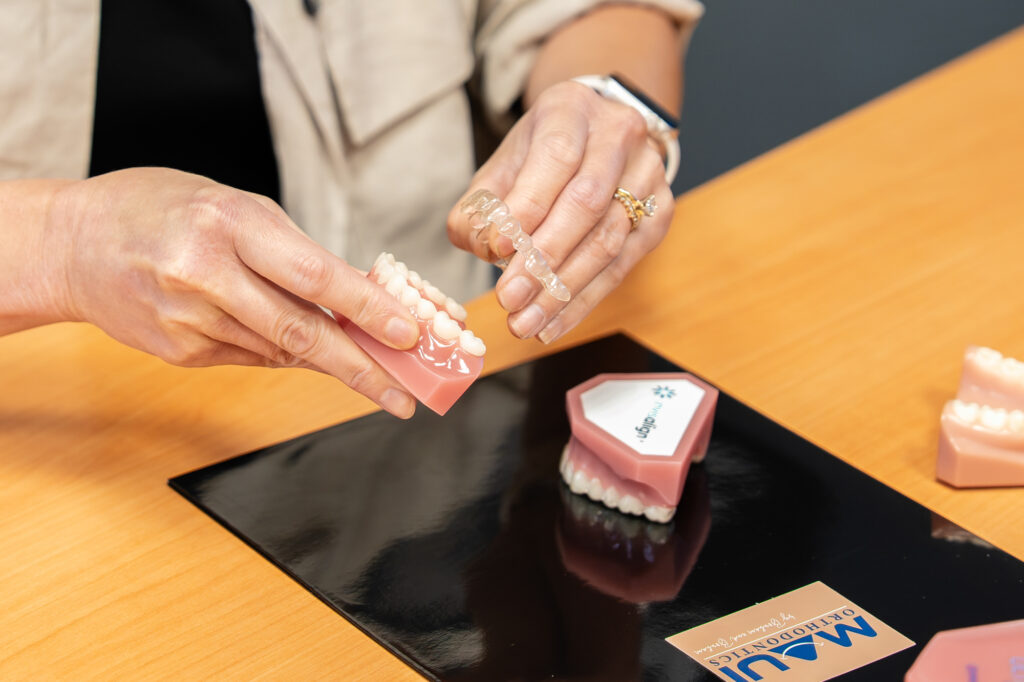
Attachments and elastics are also part of this equation, which is why how those components work is worth understanding early rather than discovering at your bonding appointment.
What Are Refinements, and Do They Add Time?
Refinements are an additional short series of aligners made after the main series finishes, using a fresh scan, to correct teeth that did not track exactly as predicted. They are common, they are planned for, and they typically add somewhere between two and six months.
Patients sometimes hear the word and assume something failed. It did not. Tooth movement is biological, and biology does not follow a software prediction to the millimeter. Digital planning gets close. Refinements close the remaining gap.
Cases involving bite correction such as a deep bite are more likely to need refinements than simple alignment cases, because vertical movement is harder to predict than horizontal movement. Building that expectation in from the start makes the end of treatment feel like completion instead of a setback.
Is Invisalign Faster Than Braces?
Not inherently. For comparable cases, aligners and fixed braces finish in broadly similar timeframes. Aligners can be quicker for straightforward alignment when worn diligently, while braces are often faster for complex crowding, stubborn rotations, and vertical bite problems, because a fixed appliance works continuously without depending on compliance.
The real difference is where the variability comes from. With braces, the wire is in your mouth whether you think about it or not. With aligners, your timeline is partly a function of your own habits.
Some patients know themselves well enough to say honestly that a removable appliance would end up in a drawer. That is useful information, and it points toward fixed treatment. Our post on low-friction Damon braces covers how modern fixed appliances handle the compliance question differently.

Getting a Real Estimate for Your Case
A published range is a starting point. Your number comes from records: digital X-rays, digital photos, and digital scans that show where each tooth sits and how far it needs to go.
Dr. Paul Bonham and Dr. Aurelia Bonham review those records together and plan every case personally, which means the estimate you get comes from the people who will actually treat you. Across more than twenty thousand patients, they have a good sense of which cases move quickly and which need patience.
Appointments during treatment typically fall every eight to twelve weeks, spaced to fit around school, work, and everything else Maui families are juggling. Both the Kahului office and the Upcountry office in Pukalani offer before and after school appointments Monday through Thursday.
Whether Invisalign treatment or braces is the better route depends on your bite. You can see how finished cases turned out, or book a first visit and get a specific answer for your own teeth.
Frequently Asked Questions About Invisalign Treatment Time
Can Invisalign work in six months?
Yes, for limited cases. Minor crowding or spacing confined to the front teeth, in a patient with a healthy bite, can finish in six months or less. Shorter treatment options exist for exactly these situations. If your case involves bite correction or significant crowding, six months is not a realistic target, and a plan promising it is likely leaving something untreated.
What happens if I do not wear my aligners enough?
Teeth fall behind the plan, and trays stop fitting properly because they were made for positions your teeth have not reached. Mild slippage may resolve by wearing the current tray longer. Larger gaps require a fresh scan and a revised series. Either way the timeline extends, which is why wear time is the first thing your orthodontist will ask about at a check.
How often do I change to a new tray?
Usually every one to two weeks, depending on your plan. Some cases move on a faster schedule when the movements involved allow it, and your orthodontist may adjust the interval as treatment progresses. Changing trays early on your own is not a shortcut, since the previous stage may not be finished.
Does treatment take longer for adults than teenagers?
Sometimes slightly, because bone remodels a bit more slowly with age, but the difference is smaller than most people assume. Adults often make up ground through better compliance. Adults are also more likely to have gum recession, prior dental work, or missing teeth in the treatment area, and those factors influence the plan more than age itself does.
Do I still need retainers after Invisalign?
Yes, permanently in some form, usually at night long term. Teeth drift back toward their previous positions regardless of what moved them, and the tissue and bone around them take time to stabilize. Retention is not optional maintenance. It is the part that protects everything the treatment accomplished.
Can my treatment time be shortened?
The best lever is wearing your trays the full prescribed hours and using elastics exactly as directed. Beyond that, showing up for checks so problems get caught early, replacing lost trays immediately, and reporting loose attachments all prevent avoidable delays. Skipping ahead through trays faster than prescribed does not shorten treatment and usually lengthens it.