Overbite is the single most common reason adults ask about clear aligners, and it is also the question where the honest answer has the most nuance. Invisalign corrects many overbites well. It is not the right tool for all of them. Which category you fall into comes down to what is causing the overbite in the first place.
Invisalign can fix most mild to moderate overbites, and many severe ones, when the problem originates in tooth position rather than jaw structure. Correction is achieved by intruding the front teeth, adjusting the bite relationship with elastics, and using attachments and bite ramps to control the movement. Overbites driven by a significant jaw size difference may require braces, growth guidance in a younger patient, or surgery.
First, a distinction that trips up almost everyone. An overbite is the vertical overlap of the upper front teeth over the lower ones. Some overlap is normal and healthy. An overjet is the horizontal distance the upper teeth sit ahead of the lower ones, which is what most people mean when they say buck teeth. Many patients arrive describing one and actually have the other, or both.
A deep bite is an overbite where the upper teeth cover most or all of the lower front teeth. Left alone over years, a deep bite can wear the lower incisors down, irritate the tissue behind the upper front teeth, and put uneven load on the jaw joints. It is a functional issue, not only a cosmetic one.

How Invisalign Corrects an Overbite
Correcting an overbite means changing vertical relationships, which is harder than simply straightening a crowded arch. A tray on its own is not enough. The auxiliary components are what make it work.
- Intrusion of the front teeth. The upper incisors, the lower incisors, or both get pushed slightly into the bone, reducing the vertical overlap.
- Attachments for grip. Small tooth-colored shapes are bonded to specific teeth so the aligner has something to push against. Without them, the tray tends to slide off rather than move the tooth.
- Bite ramps. Raised areas built into the upper aligners keep the back teeth slightly apart, which lets them settle down naturally while the front overlap decreases.
- Elastics for jaw relationship. When the overbite comes with a lower jaw positioned back, rubber bands hooked between the upper and lower arches address that relationship.
- Sequencing. The order in which teeth move is planned in advance, since moving them in the wrong order can lock the bite and stall progress.
Two of these deserve emphasis. Attachments and elastics are what separate a real bite correction from a cosmetic front-tooth alignment, and they are the components most often absent from remote aligner systems.
Vertical control is also where planning matters most. It is straightforward to make front teeth look straight while leaving the deep bite exactly as it was. A plan built around the bite from the start produces a different result than one built around the smile line.
Which Overbites Are a Good Fit for Aligners?
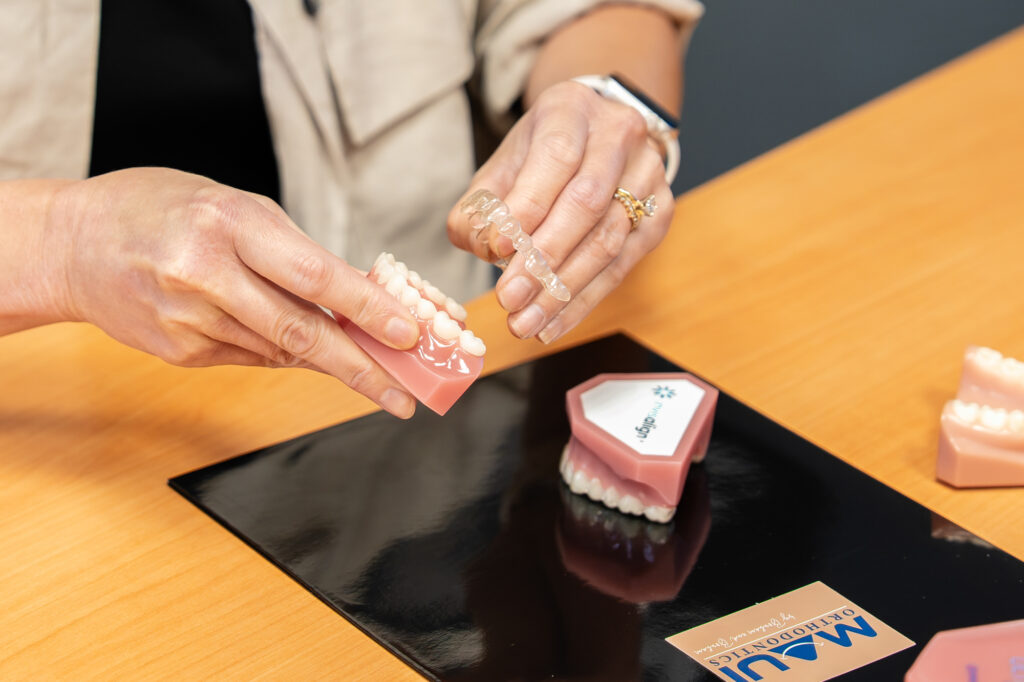
Good candidates for aligner-based overbite correction have a dental overbite, meaning the jaws are reasonably related and the teeth are positioned poorly. Poor candidates have a skeletal overbite, where the upper and lower jaws differ substantially in size or position, and the teeth are simply following along.
Typically well suited to Invisalign:
- Mild to moderate deep bite with reasonable jaw alignment
- Overbite combined with crowding or spacing in the front teeth
- Overbite with mild to moderate overjet
- Adults with fully erupted permanent teeth and healthy gums
- Relapse after previous orthodontic treatment
- Patients who will reliably wear trays 20 to 22 hours a day and use elastics as prescribed
Often better served by another approach:
- Severe skeletal discrepancy where surgical correction is part of the plan
- Deep bite alongside severe crowding or stubborn rotations, where advanced metal braces give more control
- Growing children who need jaw development guided first
- Cases where compliance is genuinely unlikely, since a removable appliance sitting in a drawer moves nothing
For fixed-appliance cases, the low-friction mechanics described in our post on Damon self-ligating braces handle vertical problems particularly well, because a wire that never comes out keeps working around the clock.
How Long Does Overbite Correction Take?
Overbite correction generally runs longer than simple alignment. Straightening crowded front teeth may take under a year. Changing a bite relationship usually takes twelve to twenty-four months, because vertical movement and jaw relationship changes happen more slowly than side-to-side alignment and depend on consistent elastic wear.
Refinements are common and expected in these cases. Once the main series is finished, a fresh scan often shows a few teeth that need additional guidance, and a short second series completes the job. That is a normal part of bite correction rather than a sign anything went wrong. More on treatment timelines in a separate post.
Retention matters more with an overbite than with almost anything else. Deep bites have a real tendency to return, so the retainer plan is part of the treatment, not an afterthought.

Getting an Answer About Your Own Bite
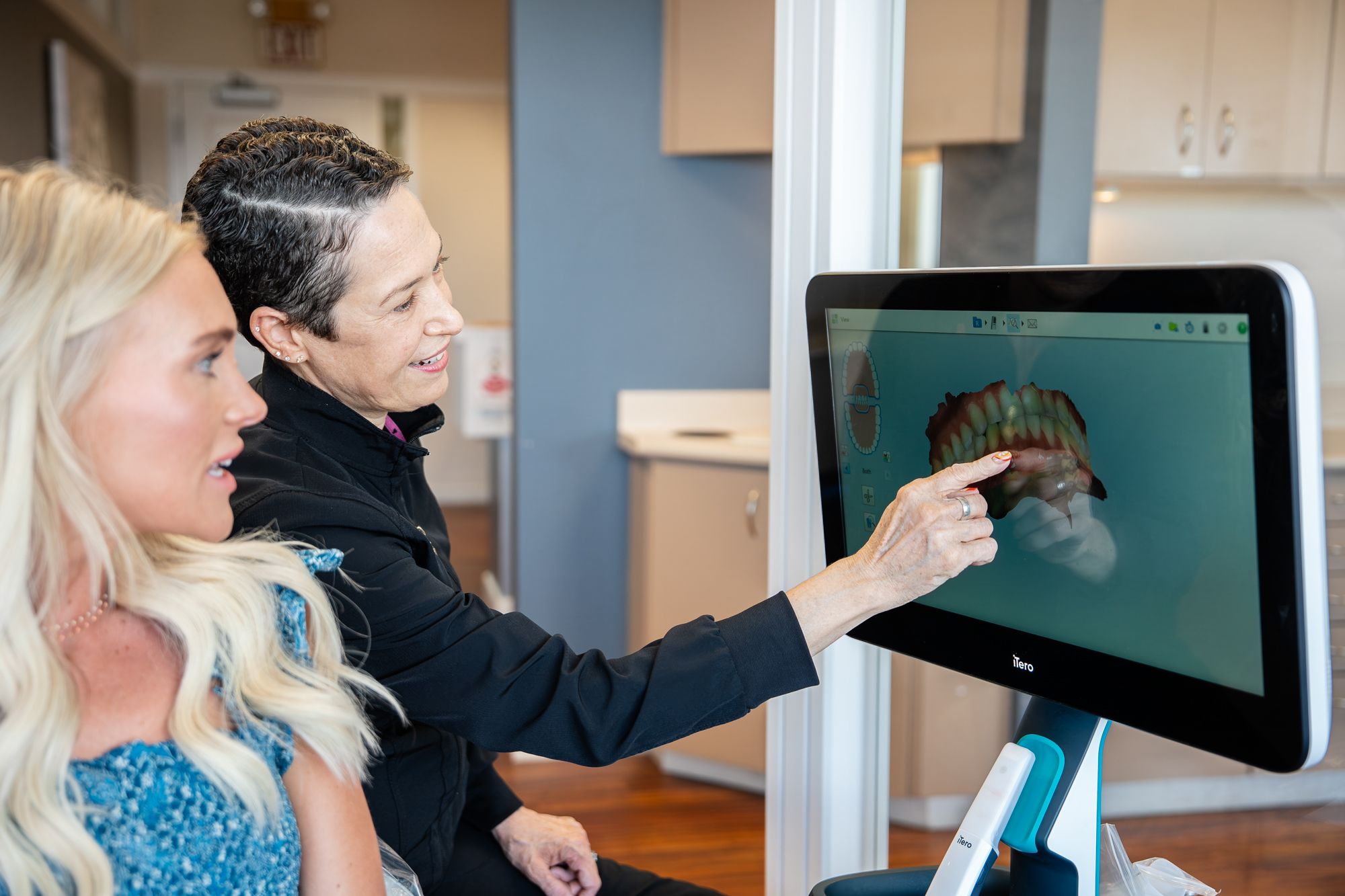
The only reliable way to know which category your overbite falls into is an exam with X-rays. A cephalometric X-ray shows the relationship between the upper and lower jaws, which is precisely what distinguishes a dental overbite from a skeletal one. Photographs cannot show it, and neither can a mirror.
Dr. Paul Bonham and Dr. Aurelia Bonham review those records together before recommending an approach, at the Pukalani office Upcountry or in Kahului. Over more than twenty years and twenty thousand patients treated, they have seen the full range of bite problems the island produces.
Sometimes the recommendation is clear aligner treatment. Sometimes braces give better control for the specific movements involved. You will hear the reasoning either way, and you can see how similar cases finished before deciding anything.
A first visit is the fastest way to get a straight answer about your bite, at no charge and with no obligation.
Frequently Asked Questions About Invisalign and Overbite
Can Invisalign fix a severe overbite?
Sometimes. A severe overbite caused by tooth position often responds well to aligners combined with attachments, bite ramps, and elastics. A severe overbite caused by a jaw size difference is a different problem, and it may call for braces, growth guidance in a younger patient, or surgical correction alongside orthodontics. X-rays are what tell the two apart.
What is the difference between an overbite and an overjet?
An overbite is vertical, describing how much the upper front teeth overlap the lower ones when you bite down. An overjet is horizontal, describing how far the upper front teeth sit ahead of the lower ones. Many people have some of both. Treatment addresses them differently, which is why the distinction matters clinically even though it sounds like semantics.
Do I need rubber bands with Invisalign for an overbite?
Often yes. Elastics address the relationship between the upper and lower jaws, which trays alone cannot change. They attach to small hooks or bonded buttons and are worn as prescribed, usually most of the day. Results depend directly on wearing them consistently, since intermittent use lets teeth drift back between stretches.
Will fixing my overbite change how my face looks?
Sometimes, in small ways. Correcting a deep bite can slightly change lip support and how much of the upper teeth show when you smile. Changes are usually subtle with tooth-only correction. Larger facial changes generally come from cases involving jaw position, which is a different treatment conversation.
Can an overbite come back after treatment?
Yes, without retention. Deep bites have a stronger tendency to relapse than many other corrections, because the muscle patterns and bite forces that contributed to the original problem are still present. Wearing retainers as prescribed, long term and typically at night, is what holds the result.
Is an overbite a health problem or just cosmetic?
It can be both. Mild overlap is normal. A deep bite that wears the lower front teeth, irritates the tissue behind the upper teeth, or loads the jaw joints unevenly is a functional issue. Whether yours falls into that category depends on how deep it is and what it is doing to the surrounding structures, which an exam can determine.