Wondering if you’ve aged out of orthodontics? Here’s the short answer: no, it’s never too late to get braces as an adult. If your teeth and gums are healthy, you’re a candidate at 30, 50, or 75.
Today, about 1 in 4 orthodontic patients is an adult, according to the American Association of Orthodontists. Your teeth respond to gentle, steady pressure the same way they always have. Bone remodels around moving teeth throughout life, which is why adults achieve beautiful results every day.
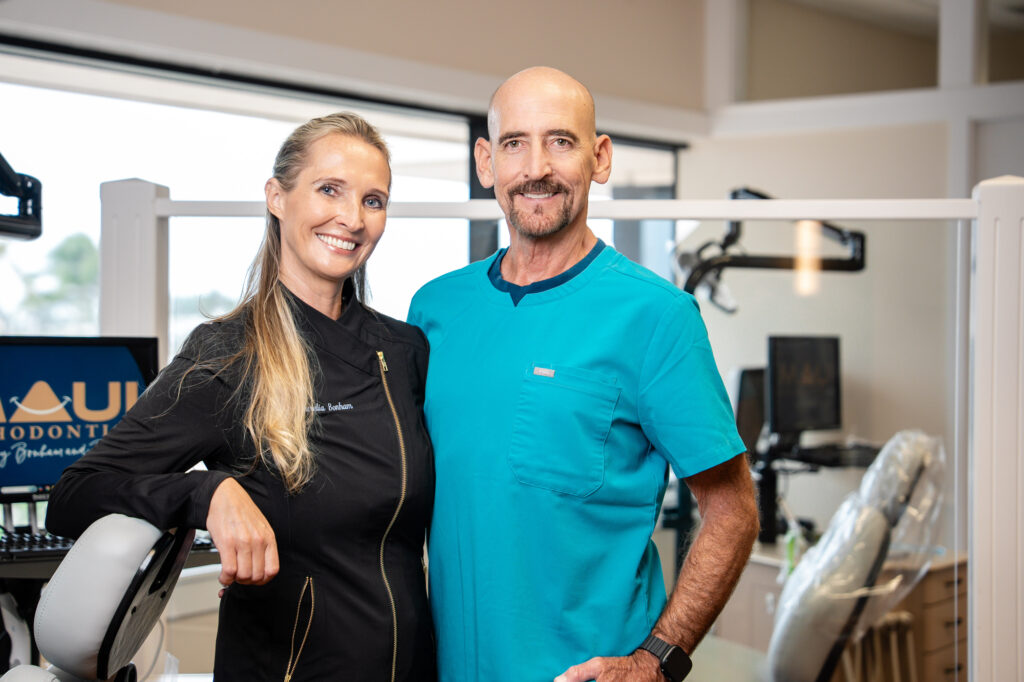
At Maui Orthodontics by Bonham and Bonham, Dr. Paul Bonham and Dr. Aurelia Bonham have treated patients across every age range. The prerequisites aren’t about birthdays. They’re about stable gums, sound teeth, and a willingness to follow the treatment plan.
Modern options also make adult treatment far more discreet and comfortable than what you may remember from school. Clear aligners, tooth-colored brackets, and smarter wire technology mean you can straighten your smile without broadcasting it to the world.
How Adult Braces Work (and What’s Different from Teen Treatment)
Braces work by applying gentle, continuous pressure to your teeth. That pressure signals the surrounding bone to remodel, allowing teeth to shift into their new positions over time. The biology is the same for a 15-year-old and a 55-year-old.
So what is different? A few important things.
Teen jaws are still growing, which gives orthodontists extra tools to guide bite development. Adults no longer have that growth to work with, so your treatment plan focuses on moving teeth within the existing jaw structure. For most adult cases, this works beautifully.
Existing dental work also gets factored in. Crowns, bridges, implants, and veneers each behave a little differently under orthodontic pressure. Dr. Paul and Dr. Aurelia plan around these so your restorations stay protected.
Adult bone tends to be denser than teen bone, which can mean a slightly longer treatment timeline. Most adults finish treatment in 12 to 24 months, though complex cases may run longer.
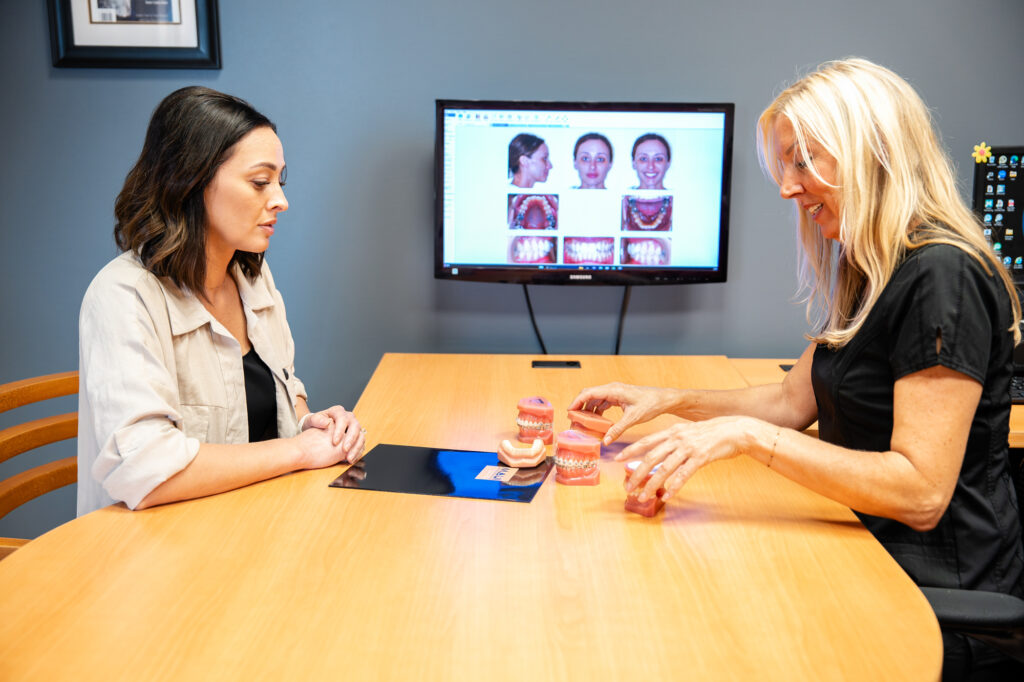
Here’s what the process looks like at Maui Orthodontics by Bonham and Bonham:
- Free consult with Dr. Paul or Dr. Aurelia to discuss goals and review your smile
- Digital scans and photos (no messy impressions) to map your teeth
- Custom treatment plan built around your bite, dental history, and lifestyle
- Active treatment with braces or Invisalign, including regular check-ins every 8-12 weeks
- Retention phase with retainers to lock in your new smile
Before any active treatment begins, your gum health is evaluated and stabilized. Healthy foundations come first.
Benefits of Getting Braces as an Adult
Straight teeth aren’t just about looks, though that’s a wonderful part of it. The health benefits often surprise adults who assumed orthodontics was purely cosmetic.
Here’s what adult patients gain from treatment:
- Easier oral hygiene. Straight teeth are simpler to brush and floss, which lowers your risk of cavities and gum disease over time.
- Better bite function. Correcting a misaligned bite reduces jaw strain, helps with TMJ discomfort, and prevents uneven tooth wear that can lead to chips, cracks, and sensitivity.
- Boosted confidence. Many adult patients tell Dr. Paul and Dr. Aurelia they smile more freely in meetings, photos, and social situations once treatment wraps up.
- A healthier foundation for future dental work. If you’re considering implants, veneers, or crowns down the road, properly aligned teeth give those restorations a stronger, longer-lasting result.
- Prevention of bigger problems. Addressing crowding, gaps, and bite issues now helps you avoid bigger dental repairs later, including root damage, excessive wear, and gum recession.
- Correction of post-childhood shifting. Many adults had braces as teens but lost or stopped wearing their retainers. Teeth naturally drift over the years, and adult treatment can bring your smile back into alignment.
Your smile should serve you for decades. Taking care of it now pays off every time you eat, speak, and laugh.
Adult Braces Options Compared: Metal, Clear, Invisalign & Lingual
Adults have more choices than ever. The right option depends on your case complexity, lifestyle, and how visible you want your treatment to be.
Here’s a side-by-side look at the most common adult treatments:
| Option | Visibility | Best For | Lifestyle Fit |
|---|---|---|---|
| Advanced Metal Braces | Most visible | Complex cases, significant bite correction | Fixed, no compliance needed |
| Clear Braces | Discreet, tooth-colored | Moderate to complex cases wanting less visibility | Fixed, no compliance needed |
| Invisalign | Nearly invisible | Mild to moderate cases | Removable; requires 22 hours/day wear |
| Lingual Braces | Hidden behind teeth | Patients wanting fully invisible treatment | Fixed; brief speech adjustment period |
Advanced metal braces are the workhorse of orthodontics. They handle the most complex cases. Dr. Paul and Dr. Aurelia use Damon self-ligating braces, which are smaller and more comfortable than older-generation brackets.
Clear braces use tooth-colored ceramic brackets that blend with your natural enamel. They offer the strength of fixed braces with a much subtler look.
Invisalign uses a series of clear, removable aligners. You pop them out to eat and brush, which many adults appreciate. The tradeoff is discipline: aligners only work when you wear them 20 to 22 hours a day.
Lingual braces sit on the back side of your teeth, making them completely hidden from view. They require a short adjustment period for speech.
Maui Orthodontics by Bonham and Bonham offers Invisalign, advanced metal braces, and clear braces at both our Kahului and Pukalani offices. Your free consult will help determine which option fits your smile goals best.
Who Is a Good Candidate for Adult Braces?
Age isn’t a disqualifier. Oral health status is what matters. Most adults with healthy teeth and gums are strong candidates for orthodontic treatment.
You’re likely a good candidate if you have:
- Healthy gums free of active periodontal disease (any gum issues should be treated and stabilized first)
- Strong, stable teeth with adequate bone support
- A commitment to excellent oral hygiene throughout treatment, especially with fixed braces
- Willingness to follow instructions, including wearing retainers after treatment to maintain your results
- Realistic expectations about treatment timeline and the daily habits involved
- Existing crowns, bridges, or implants are not a dealbreaker. Dr. Paul and Dr. Aurelia plan around them.
The only way to know for certain is with a thorough exam. Your consultation at Maui Orthodontics by Bonham and Bonham includes digital scans, X-rays, and a face-to-face conversation with one of our board-certified orthodontists. From there, you’ll have a clear picture of your options.

Frequently Asked Questions About Adult Braces
What is the oldest person to get braces?
There’s no official age cap. Orthodontists regularly treat patients in their 60s, 70s, and even 80s. As long as your gums and supporting bone are healthy, teeth can be moved safely at any age. Many adults seek treatment later in life to improve function, address shifting, or finally get the smile they always wanted.
Can I fix an overbite as an adult?
Yes. Most bite issues, including overbites, underbites, crossbites, and open bites, can be corrected with braces or Invisalign as an adult. Treatment focuses on repositioning teeth within your existing jaw structure. Severe skeletal cases may require a combined approach, which Dr. Paul or Dr. Aurelia will discuss with you during your consult.
Do braces make teeth 100% straight?
Braces can achieve excellent alignment and dramatically improve both the look and function of your smile. “Straight” is a goal your orthodontist works toward based on your specific anatomy. After active treatment, retainers are essential. Without them, teeth gradually shift back toward their original positions, which is why lifelong retainer wear is so important.
Do adult braces hurt more than teen braces?
No. Discomfort levels are similar for adults and teens, and most people describe it as mild soreness that fades within a few days of each adjustment. Modern bracket systems like Damon self-ligating braces apply lighter forces, which many patients find more comfortable than older-generation braces.
Can I get braces with crowns or implants?
Yes. Crowns and bridges can be moved along with your natural teeth, though they may need special bonding techniques. Implants are fused to the bone and cannot be moved, so your treatment plan is designed around them. Dr. Paul and Dr. Aurelia routinely create plans that work beautifully with existing dental work.
Ready to find out if adult braces are right for you? Schedule a free consult at Maui Orthodontics by Bonham and Bonham. Visit our Kahului office at 140 Ho’ohana St, Suite 312 (808-871-6576) or our Pukalani office at 24 Kiopa’a Street, Suite 101 (808-793-3026). We’d love to welcome you to our patient ohana and help you discover your healthiest, most confident smile.